
Question? [email protected]
Discover How To Bake Delicious Gluten-Free Bread That Actually Rises Slices, And Tastes Normal...
On Your Next Loaf!
Learn the exact method I use to fix dense, gummy, or crumbly gluten-free bread - even if you've wasted dozens of failed loaves.
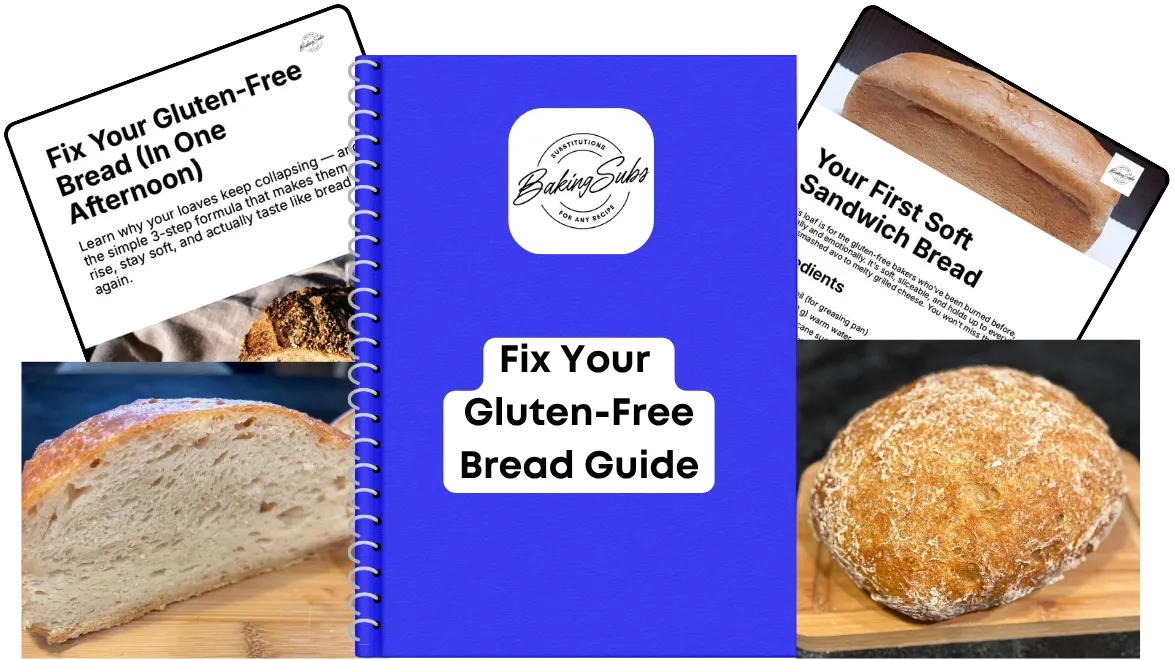
FINALLY: a way to bake gluten-free bread that works, now that you know why the last one failed.
Let's face it,
You did everything the recipe told you to do.
And you still pulled out a brick. Or a loaf that looked perfect until you cut it and found that wet, gummy band in the middle. Or one that crumbled into sand the second the knife touched it.
So you tried another recipe. Different blogger, different blend, same afternoon gone, same result.
Most of the people writing gluten-free recipes online are handing you a list of ingredients and wishing you luck. They cannot tell you why yours failed, because they never tested what happens when you change the flour, the water, or the binder.
So you keep buying flour, keep clearing your Saturday, and keep throwing loaves away, while the $8 bag from the store starts to look reasonable.
But what if gluten-free bread could be predictable?
What if YOU could be the person in your family who makes the bread everybody actually asks for?
WHO AM I AND WHY SHOULD YOU LISTEN?
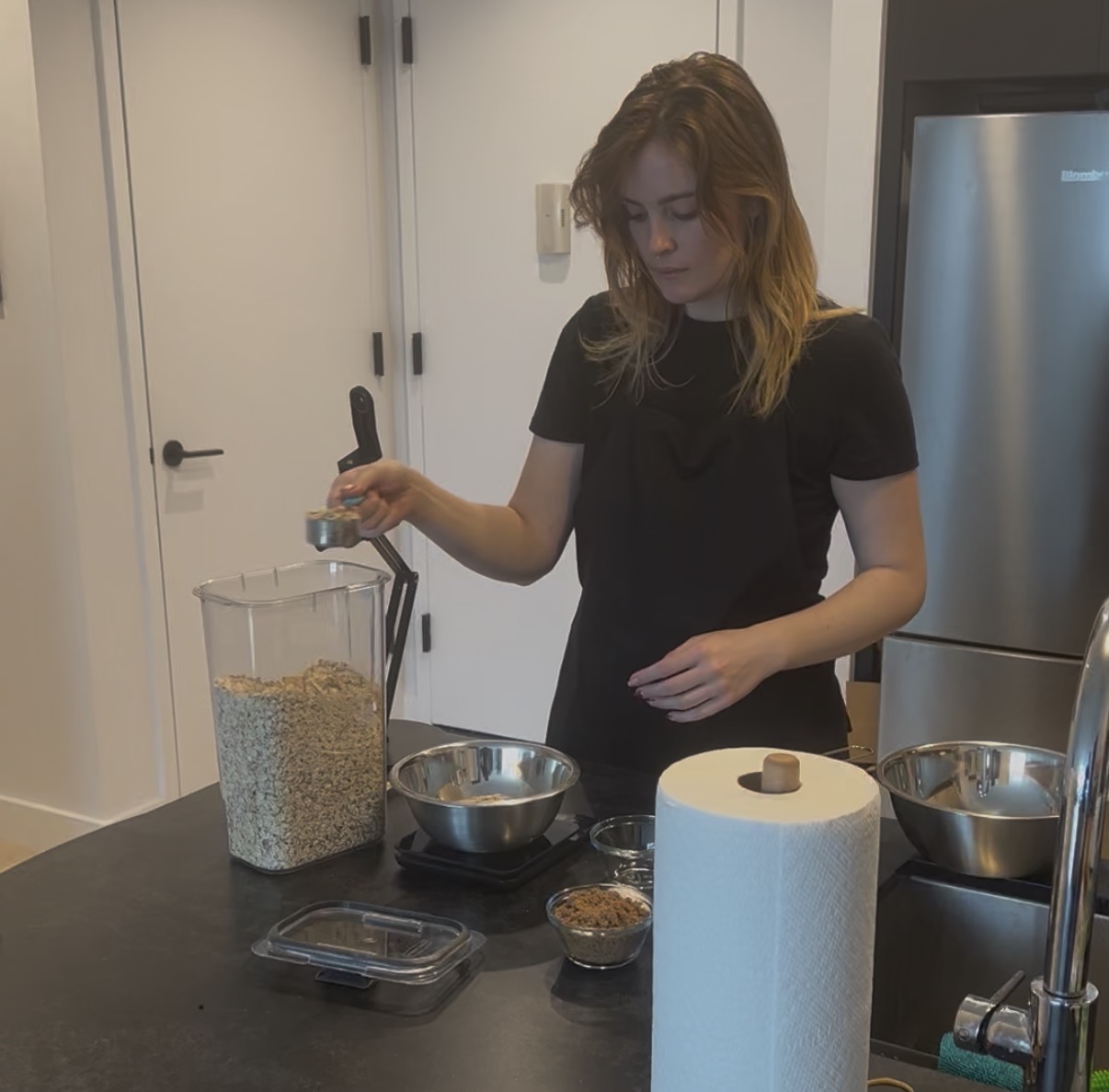
I'm Maddy, and unlike most people handing you a gluten-free recipe right now:
- I've been baking with dietary restrictions for my family for over a decade. My mom loves experimenting with new recipes and ideas, and I've learned a ton from her along the way.
- I run BakingSubs, where I have published over 300+ posts on the science behind baking. It is read by over 20,000 bakers every month, and each one of those posts started with a question that I could not find the answer to anywhere else.
- I am not a recipe blogger. I am not going to spam you with fourteen more recipes that you'll never use. I'm going to teach you the three jobs gluten does so you can finally fix a loaf you have already made before, whether it was from a book, blog, or your grandmother.
But more importantly, I am still baking every week, still testing baking tweaks, still finding out what breaks instead of repeating something I wrote once and never checked again.
Following the recipe isn't enough anymore
You have probably already spent real money trying to fix this.
Did you ever:
Buy the expensive blend everybody swore by, follow the instructions exactly, and still get a dense loaf?
Get told the problem was your yeast, then your oven, then your altitude, then your patience?
Read a recipe with 300 comments and not one of them explaining why it went wrong for you?
Buy a bread machine, a proofing box, or a stand mixer attachment that did not change the result at all?
All of those things are answers to the same question. How do I follow this recipe better?
And for wheat bread, that is the right question. The flour does the hard part for you.
But gluten-free flour does not.
Gluten does three separate jobs in a loaf: it builds structure, it traps gas for lift, and it manages moisture balance.
Take it out and you have not removed one ingredient. You have removed three functions, and nothing in the bag replaces them automatically.
That is why a recipe can work perfectly for the person who wrote it and fail in your kitchen. Their blend covered one of those three jobs. Yours does not.
That's the real problem.
Stop following recipes. Start rebuilding gluten.
Most bakers are stuck because they are asking the wrong question.
Instead of "which recipe should I try next?" you need to ask:
"Which of the three jobs is my loaf failing at, and what fixes that one?"
It is the difference between:
Trying recipe after recipe and hoping one of them happens to match the flour, the humidity, and the oven you actually have. Which is guessing, and gluten-free baking punishes guessing.
Looking at a gummy center, knowing in thirty seconds that it is a moisture problem and not a yeast problem, and changing the one thing that fixes it.
The second approach takes fewer recipes and far less flour. It just takes understanding what you are actually rebuilding.
And that is exactly what I show you inside.
Introducing: The Fix Your GF Bread Guide
I compressed 24 months of testing and hundreds of failed loaves into a system that:
Starts with the loaf you have already ruined. Diagnose dense, gummy, crumbly, sunken, or dry in about thirty seconds with the Instant Troubleshooting Guide, and know what to change before you preheat anything.
Teaches the 3-Function Framework - Learn about structure, lift, moisture balance so you stop treating gluten-free flour as a swap and start treating it as three jobs you are covering deliberately.
Works with the flour you already own. The Flour Substitution Chart gives you the exact adjustments for Bob's Red Mill, King Arthur, GFJules, and Cup4Cup, plus how to read any blend you can buy where you live.
Gives you two recipes worth keeping. A Soft Sandwich Bread that slices clean and is still soft the next day, and a Crusty Artisan Loaf with a real crust and an open crumb. Both adaptable to any blend.
Proves itself this afternoon, not in six weeks of trial and error. One bake, one result, one thing learned.
No dairy, no eggs, and no nuts in the three core recipes. Every measurement in grams.
This isn't theory.
This is the exact system I run in my own kitchen, and the same one 510+ bakers are running in theirs.
Get instant access for just $17
Why just $17?
For three reasons:
1. Because money talks. I would rather you pay me something than take it for free. People who put money down actually take action. People who grab a free guide usually don't.
2. This is a numbers game. I would rather have a thousand serious bakers running this and sending me photos of their beautiful crumb than give it away to people who will never turn the oven on.
3. Some of the people who fix their bread this week will want more help from me to bake other delicious goodies. Most never will, and that is completely fine with me.
FREQUENTLY ASKED QUESTIONS
Q: I have multiple allergens I need to avoid. What ingredients are in these recipes that I should know about?
A: Great question — and yes, you absolutely can use this guide even if you’re managing several allergies.
Here are the key ingredients used across the recipes inside the guide, so you can quickly see what applies to you:
🌾 Flours & Starches Used
These are the main structural flours and starches in the bread recipes:
- Brown rice flour
- Oat flour
- Sorghum flour
- Potato starch
Binders & Structure Builders
- Ground chia seeds (main binder)
- Psyllium husk (optional swap mentioned)
- Eggs are NOT used in the core bread recipes
Other Common Ingredients
- Sea salt
- Cane sugar
- Active dry yeast
- Olive oil or avocado oil
- Honey (optional moisture helper)
🚫 What’s NOT in the base recipes
The three core breads do not use:
- Dairy
- Eggs
- Nuts (unless you choose to use almond flour as a variation)
- Soy
- Gluten
- Sesame
- Corn (unless using a flour blend that contains it)
If you have multiple allergies the guide includes:
- A full Flour Substitution & Adjustment Chart (page 9) so you can adapt to blends that fit your allergens
- Troubleshooting for adjusting water, swaps, and ratios safely
And if you tell us which allergens you’re avoiding after purchase, we can point you to the exact swaps you’ll want to make.
Q: Will this work with the flour blend I already have?
A: Yes. You’ll learn how to use all the common gluten-free flours too, and we’ll walk you through substitutions. No fancy equipment required either!
Q: What if I'm completely new to gluten-free baking?
A: Perfect. Step-by-step instructions get you a loaf on your counter this afternoon.
Q: Can’t I just use a 1:1 gluten-free flour in regular recipes?
A: Great question! While 1:1 flours can work for a handful of bakes, they often lead to results that are dense, gummy, crumbly, or lacking flavor. We’ve already worked out the flour ratios for you so you get the best flavor and texture every time.
Instead of being limited by what a bagged blend can do, you’ll learn how to combine gluten-free flours to create exactly what you want—whether that’s a chewy pizza crust, a soft tender cake, or a flaky scone. Inside the Fix Your GF Bread Guide, you’ll discover the methods and recipes that make gluten-free baking actually taste amazing.
Q: How long is this going to take me?
A: Reading the guide is a lunch break. The first loaf is one afternoon. Every loaf after that is a normal bake, because you already know what you are adjusting and why.
Q: I'm outside the US - will this work with my local flour brands?
A: Absolutely! The guide teaches you the underlying principles and ratios, so you can use whatever gluten-free flour blend is available in your country (including Australian, UK, and European brands). The flour substitution guide shows you exactly how to adapt recipes to your local ingredients. Plus, all measurements are in grams/weights, not cups, so it works anywhere in the world.
Copyright © 2025 | BakingSubs | All Rights Reserved
NOT FACEBOOK™: This site is not a part of the Facebook™ website or Facebook Inc. Additionally, this site is NOT endorsed by Facebook™ in any way. FACEBOOK™ is a trademark of FACEBOOK™, Inc.