Revealed: the framework 900+ bakers used to stop guessing and start converting any recipe gluten-free
Discover How To Convert Any Recipe Gluten-Free And Have Nobody Notice...
Starting With Your Next Bake.
Learn the exact system I used to fix two years of failed bakes: the seven jobs gluten was doing, and what replaces each one.
FINALLY: an answer to why your bakes keep failing, now that you've ruled out the recipe, the blend, and yourself.
Let's face it,
You measured everything. You followed every step.
You bought the 1:1 blend the recipe called for. You used the right xanthan gum. You let it rest exactly as long as it said.
And it came out dense. Or gummy. Or crumbly. Or somehow all three at once.
So you bought another cookbook. Watched another video. Joined the Facebook group. Tried a different flour.
And the next batch was wrong in a different way.
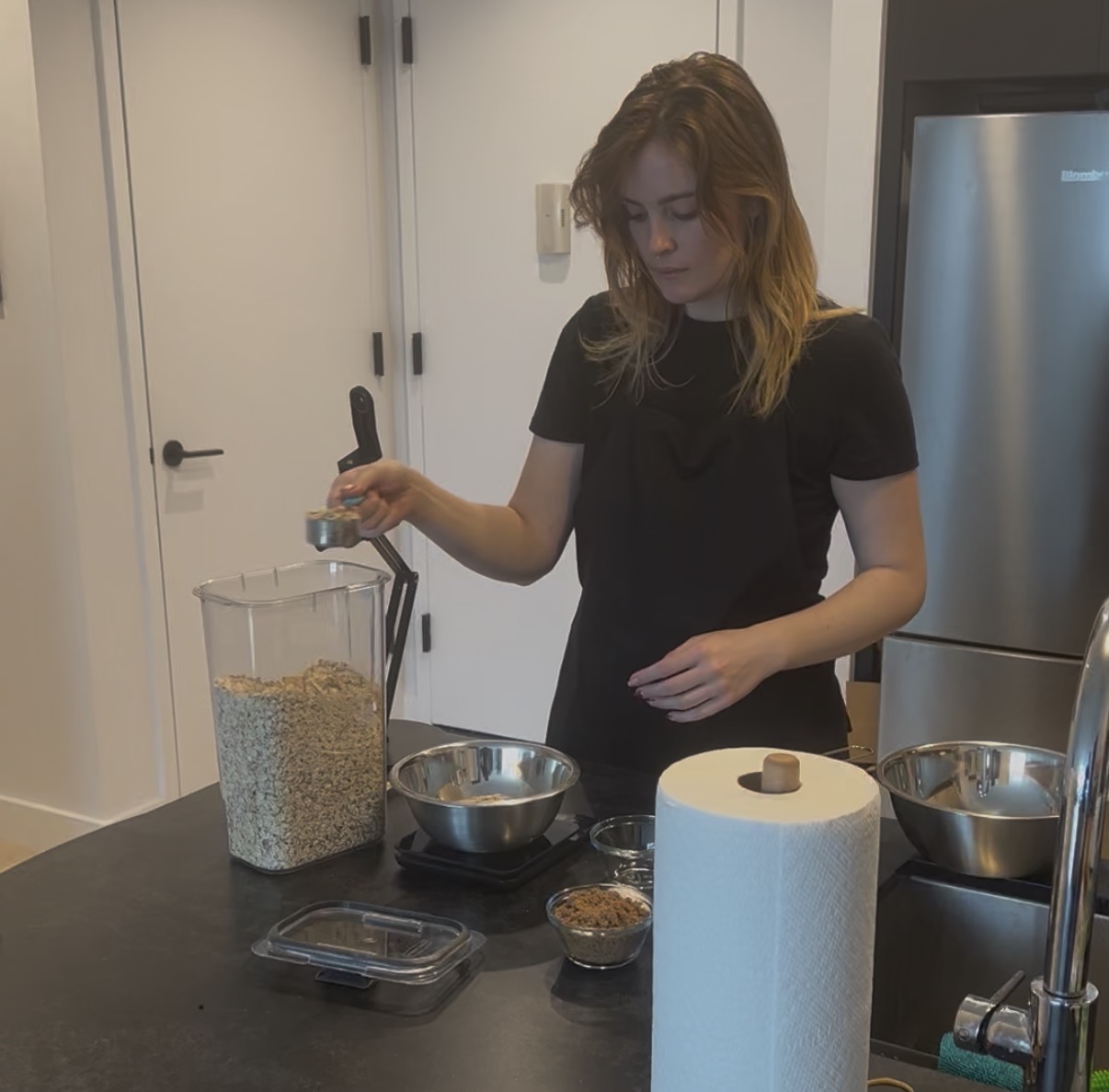
Most of the people writing gluten-free recipes will tell you what to use. Almost none of them will tell you why it's in there or what it's doing, because explaining the mechanism doesn't sell flour and it doesn't get clicks the way a new recipe does.
So you keep buying $12 bags, keep clearing your Saturday, and keep scraping something into the bin, while your hands quietly learn the wrong instincts from a system that no longer applies.
But what if gluten-free baking could be predictable?
What if YOU could be the one who brings something delicious to the table and doesn't apologize for it first?
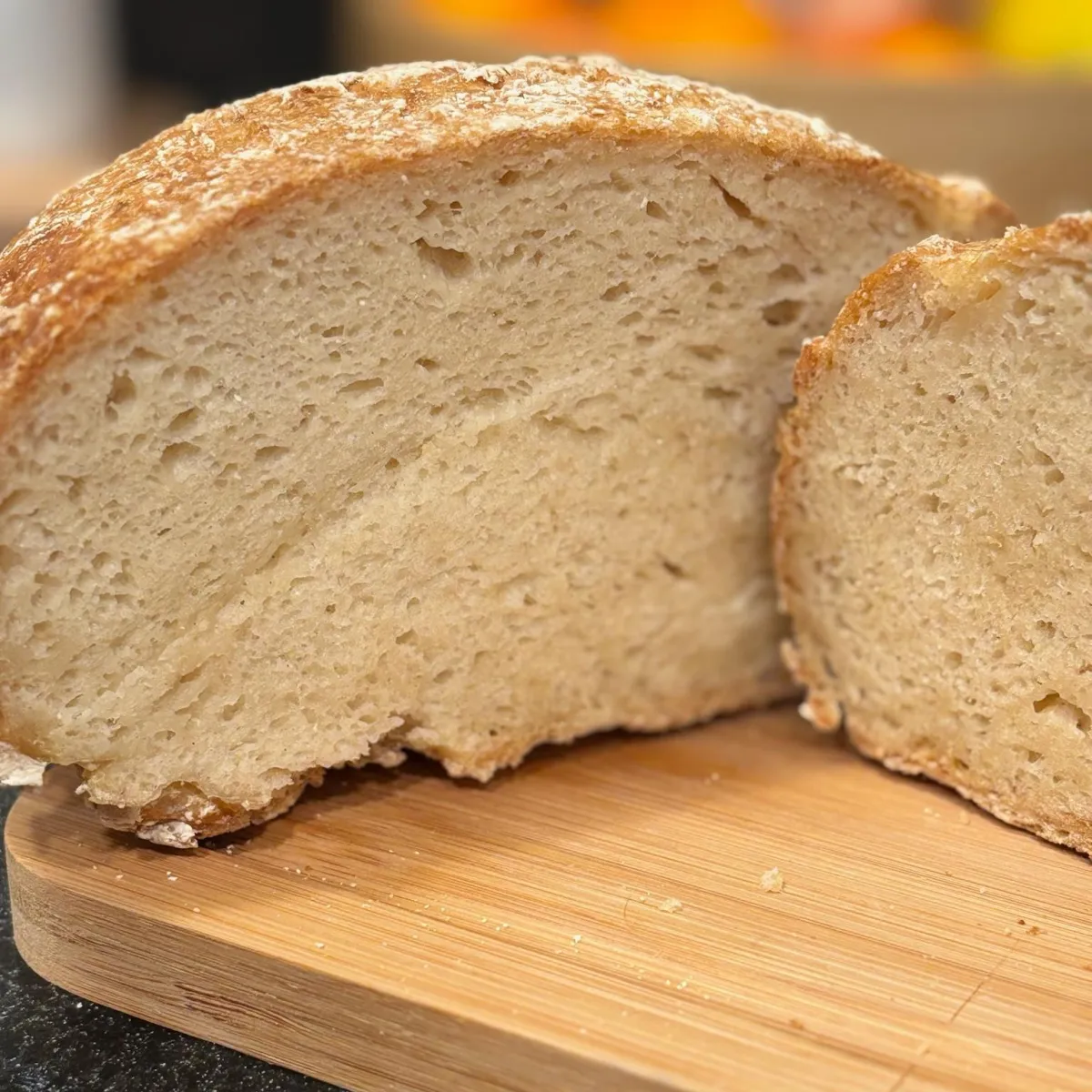
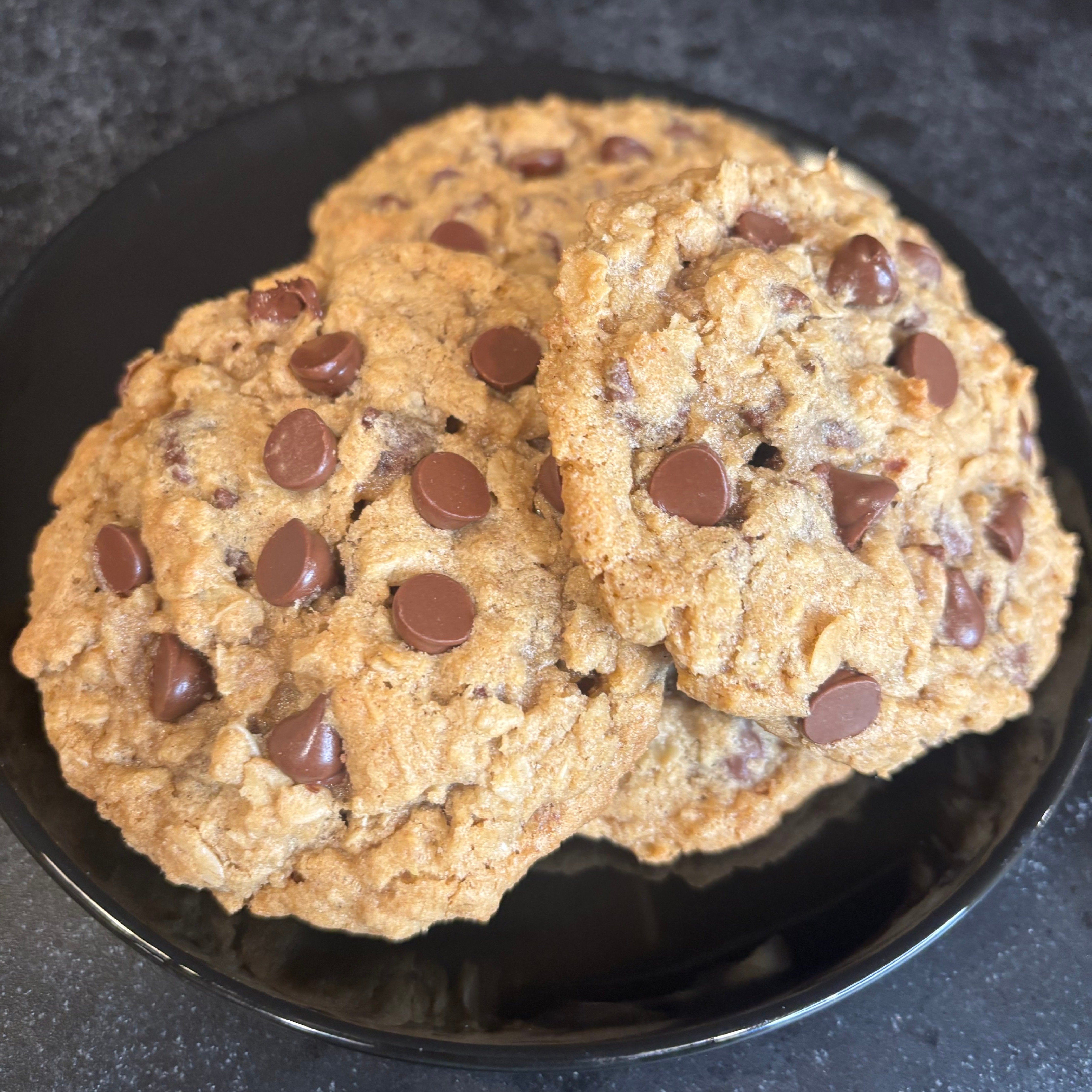
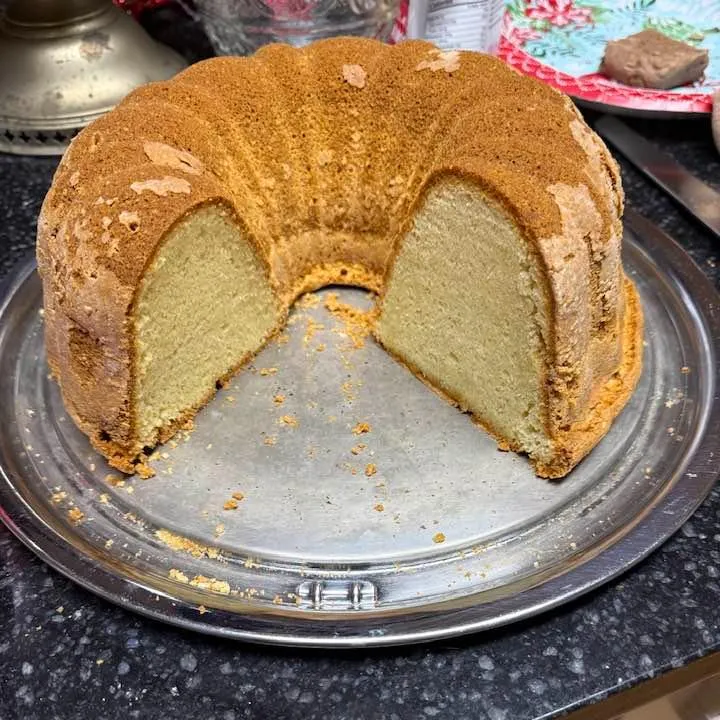
Who am I, and why should you listen?
I'm Maddy, and unlike most people handing you a gluten-free recipe right now:
I didn't start as a gluten-free baker. I started as a baker who had to relearn everything. My mom taught me when I was 8, and in my entire life before this, nothing I made had ever turned out genuinely bad.
I tested tons of different flours in isolation before I started testing recipes.
I write a comprehensive blog at BakingSubs, which now has 300+ posts on why baking works the way it does. Every one of them started with a question somebody couldn't get answered anywhere else.
900+ bakers have run this system. And almost all of them had already bought at least one gluten-free cookbook before they found us.
But more importantly, I'm still baking every week and still testing, so what's inside is what's working now, not something I figured out once and stopped checking.
Another cookbook isn't going to fix this.
You've probably already spent real money trying to solve this problem.
Did you ever:
Buy the exact blend the recipe named, follow it to the gram, and still pull out something gummy?
Throw away $8–12 of flour on one failed loaf, then do it again the next weekend hoping things turn out better?
Get told the problem was your yeast, then your oven, then your altitude, then your patience?
Bring something to a family gathering and explain what it was before anyone had a chance to taste it?
All of those are answers to the same question. How do I follow this recipe better?
And for wheat baking, that's the right question. The flour does the hard part for you.
Gluten-free flour doesn't.
Inside every wheat recipe, gluten was silently doing seven separate jobs at the same time. Take it out and you haven't removed one ingredient, you've removed seven functions, all at once, and nothing in the bag replaces them automatically.
That's why your bread is gummy: nothing is supporting structure or trapping rise.
That's why your cookies crumble: nothing is binding.
That's why your cake is dense: nothing is creating elasticity.
That's why it's stale by lunchtime the next day: nothing is retaining moisture.
You weren't missing a recipe. You were missing seven replacements for seven jobs nobody told you existed.
That's the real problem.
Stop swapping flour. Start replacing jobs.
Most bakers are stuck because they're asking the wrong question.
Instead of "which flour blend should I try next?" you need to ask:
"Which of gluten's seven jobs does this recipe need most, and what replaces each one?"
It's the difference between:
Cycling through blends and hoping one of them happens to cover whatever your recipe was missing. Which is guessing, and gluten-free baking punishes guessing.
Looking at a recipe before you mix anything, spotting that nothing in it is doing the gas-trapping job, and adding the one thing that does.
The second approach needs fewer recipes and far less flour. It just needs you to know what you're actually rebuilding.
And that's exactly what you'll learn inside.
Introducing: The Confident Gluten-Free Baker Toolkit
I combined everything I learned from two years of baking gluten-free, into one system.
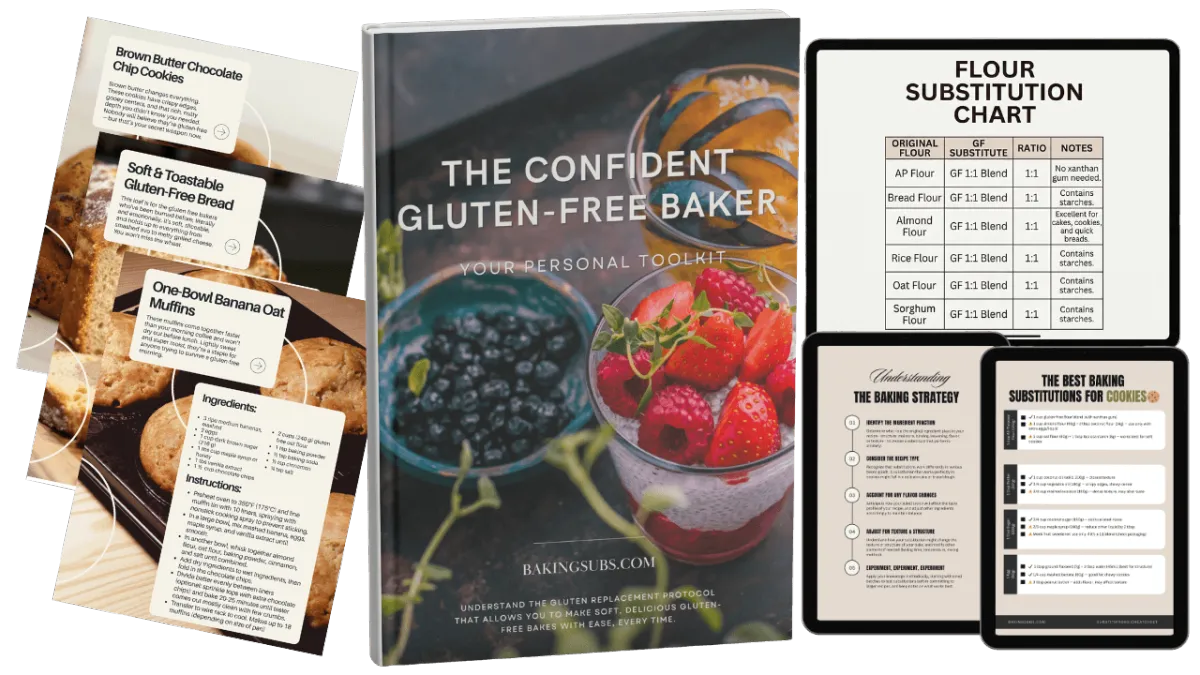
Inside, you'll find:
The 7 Hidden Jobs of Gluten — exactly which job is causing your specific failure (gummy, dense, crumbly, sandy, or stale by morning), and what replaces each one
The diagnostic tools. The Binder Decision Tree (xanthan vs psyllium vs chia vs flax, and why mixing the wrong ones wrecks texture) and the Pre-Bake Checklist, so you can predict a failure before you mix instead of discovering it at 4pm.
The techniques that fix the most bakes. The Psyllium Husk Gel, the 20–30 Minute Rest that kills grit in almost any recipe, the Egg White Scaffolding Method, and the Carbonation Trick.
The 3 Battle-Tested Flour Blends, with exact ratios for soft bakes, cakes, and breads — plus the Custom Blend Builder, so you can shift any of them 5–10% for softer muffins or chewier pancakes.
50 real failed bakes, diagnosed. Every one traced back to which of the seven jobs went undone, which is what turns the framework from an idea into a tool you use.
10 Worked-Example Recipes — every recipe is a demonstration of the 7 Jobs framework in action, including:
Sandwich Bread (the loaf that survives grilled cheese)
Sourdough
Brown Butter Chocolate Chip Cookies
Banana Oat Muffins
Pizza Crust (holds toppings, folds without cracking)
Vanilla Cake
Biscuits
Oatmeal Cookies
Cinnamon Rolls (with the double-spiral technique that locks filling in every bite)
And so much more...
The point isn't to give you a ton of recipes. It's that after this you can pick up a wheat recipe from your grandma, your favorite blogger, anywhere, and convert it confidently the first time.
This is the framework I built for my own kitchen because I was about to quit, and the same one 900+ bakers across the world are running in theirs.

Backed By Our Unconditional 30 Day Money Back Guarantee
Try the Toolkit. Bake from it. If, within 30 days, you can't honestly say "I can't believe this is gluten-free" about something you've baked from this system, email us. Full refund. Keep the bonuses.
We're taking all the risk. The only way you lose is by continuing to struggle with the same problems you have right now.
Frequently Asked Questions
Q: Is this a cookbook?
A: No, and that's the point. There are 10 recipes inside, but they're there as demonstrations of the framework, not as the product. A cookbook gives you a hundred things you can make. This gives you the ability to fix the ones you already have and convert the ones you can't currently make at all.
Q: Will this work with the flour blend I already own?
A: Yes. You'll learn what each flour and starch is actually doing, so you can read the back of any bag — store blend or your own mix — and know which of the seven jobs it covers and which it leaves open. There are also three tested blends inside if you'd rather mix your own.
Q: I have other allergens to avoid. Can I still use this?
A: Mostly, yes, and the framework is the reason. Once you know which job an ingredient is doing, you can find another ingredient that does the same job. Egg white scaffolding, for example, is one way to rebuild gas-trapping and not the only one.
Q: How long will this take me?
A: About 90 minutes to learn the framework. After that it costs you nothing extra, because you're applying it to bakes you were already doing.
Q: What if I'm completely new to gluten-free baking?
A: Better, honestly. You have fewer wrong instincts to unlearn. Most of the people who struggle hardest are experienced wheat bakers using cues — how the dough feels, how it looks when it's done — from a system that doesn't apply anymore.
Q: Do I need special equipment?
A: No. A scale, because everything is in grams. Nothing else you don't already have.
Q: Is there a printed version?
A: Yes, available alongside the digital download at checkout.
Q: I'm outside the US. Will this work with my local brands?
A: Yes. It teaches principles and ratios rather than brand names, and everything is weighed in grams, so it travels.